
Understanding IPTV reseller pricing is the single most important step in launching a successful and profitable streaming business. Before you can market your service or gain a single customer, you must master the numbers behind the business. This comprehensive guide is designed for professionals and serious entrepreneurs. We will explore the core financial models, break down what you’re really paying for, and provide the framework you need to build a sustainable and scalable IPTV service. This is not a get-rich-quick scheme; it’s a business model that rewards careful planning and strategic investment.
SUBSCRIBE NOW
This article provides an in-depth analysis of the IPTV reseller cost structures that dominate the market today. We will give you the tools to not only choose a provider but to build a pricing strategy that ensures long-term profitability.
What is an IPTV Reseller and Why is Pricing So Critical?
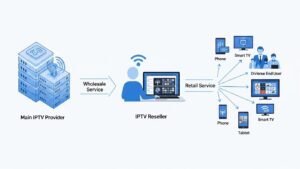
An IPTV (Internet Protocol Television) reseller acts as a retailer for a larger IPTV provider. You purchase access to their streaming service—including live channels, video on demand (VOD), and server infrastructure—at a wholesale rate. You then sell this service to your own customers under your own brand at a retail price.
Your primary job is not technical; it is commercial. You are focused on:
- Marketing and sales
- Customer acquisition
- First-line customer support
The provider handles the complex and expensive backend operations. This is why your IPTV reseller pricing structure is the foundation of your business. The margin between your wholesale cost and your retail price is your gross profit. Get it wrong, and you could be working for free or, even worse, losing money.
The Core Models of IPTV Reseller Pricing
When you begin investigating providers, you will find their wholesale costs are presented in one of two main structures: the credit-based system or the subscription-slot model.
The Credit-Based System: A Deep Dive

SUBSCRIBE NOW
The credit-based model is the industry standard. It offers the best blend of flexibility and scalability for most resellers.
How It Works: You purchase a bulk number of “credits” from your provider. These credits function as a currency within your reseller dashboard. You then spend these credits to create subscription plans for your customers.
A common credit cost structure might look like this:
| Subscription Length | Cost in Credits |
|---|---|
| 1-Month Plan | 1 Credit |
| 3-Month Plan | 3 Credits |
| 6-Month Plan | 6 Credits |
| 12-Month Plan | 12 Credits |
The core principle of this model is volume discount. The more credits you buy at once, the lower your cost per credit, which directly increases your potential profit margin on every sale.
Quote: “In the credit model, your initial investment dictates your long-term profitability. A larger upfront purchase of credits is an investment in healthier margins.”
Pros and Cons of the Credit Model
- Pro: Highly Scalable. You simply buy more credits as your customer base grows. There are no artificial limits.
- Pro: Excellent Volume Discounts. This is the best way to lower your wholesale IPTV reseller cost per customer.
- Pro: Flexible. Easily create plans of different durations (1, 3, 6, 12 months) to offer your customers more choice.
- Con: Higher Upfront Cost. To secure the best pricing, you must be prepared for a larger initial investment.
- Con: Potential for Expiring Credits. Some providers have a policy where unused credits expire after a certain period (e.g., one year). You must clarify this before purchasing.
The Subscription-Slot Model: An Alternative
Though less common, the subscription-slot model offers predictability, which can be attractive to new resellers who are still forecasting their sales.
How It Works: You pay a recurring monthly or annual fee to your provider in exchange for a fixed number of active customer “slots.” For example, you might pay $150 per month for the ability to manage up to 50 active customers.
Pros and Cons of the Slot Model
- Pro: Predictable Expenses. Your main cost is a fixed, recurring fee, which can simplify bookkeeping and financial planning.
- Pro: Lower Initial Barrier to Entry. It may require less upfront capital compared to buying a large credit bundle.
- Con: “Use It or Lose It.” If you pay for 50 slots but only have 30 customers, you are paying for 20 unused slots. This waste can severely damage your margins.
- Con: Less Scalable. To grow beyond your slot limit, you often have to upgrade to a completely new, more expensive tier, which can be a clumsy transition.
Key Factors That Determine Your IPTV Reseller Cost

SUBSCRIBE NOW
The price of IPTV reseller packages is not arbitrary. It is directly tied to the quality, features, and reliability of the service you are buying. Understanding these factors is crucial when comparing providers.
1. Provider Infrastructure and Server Stability
This is the most important factor. A premium provider invests heavily in a global network of powerful servers. This prevents buffering, freezing, and downtime, especially during major live events like a championship sports match. A cheap provider will overload their servers, leading to angry customers and a ruined reputation. You are paying for reliability.
2. Content Library: Quality and Quantity
The size and quality of the channel list and VOD library directly influence the price.
- Channel Count: Does it include 10,000, 20,000, or more channels?
- Resolution: Are 4K and Full HD (1080p) streams widely available, or is it mostly Standard Definition (SD)?
- Premium Categories: Does the service include premium sports packages, international channels from specific regions, and 24/7 channels?
- VOD & Series: Is the Video-On-Demand library extensive and regularly updated with new movies and TV series?
3. Number of Connections and Reseller Credits
As discussed in the credit model, volume is the biggest driver of your per-customer cost. Buying 100 credits will always be more expensive per credit than buying 1,000.
| Package Example | Number of Credits | Total Cost (USD) | Price Per Credit (USD) |
|---|---|---|---|
| Trial Package | 50 | $200 | $4.00 |
| Business Package | 200 | $500 | $2.50 |
| Enterprise Package | 500 | $1,000 | $2.00 |
Note: These prices are illustrative examples to demonstrate the volume discount principle.
4. Included Features and Technology
Advanced features add value to the end-user and therefore increase the wholesale cost.
- EPG (Electronic Program Guide): A reliable, well-designed TV guide is a must-have.
- Catch-Up TV: Allows users to watch programs that have aired in the past few days.
- Branded Apps: Some top-tier providers offer to create a custom app for you with your own logo and branding, providing a more professional image.
Important Note: A provider offering a custom-branded app signals a high level of professionalism and technical capability. While this often comes at a premium, it can dramatically increase your brand’s perceived value.
How to Choose the Right Provider: A Professional Checklist
Choosing the wrong provider is the fastest way to fail. Use this checklist to vet potential partners.
- Demand a Free Trial. NEVER partner with a provider that does not offer a 24-48 hour free trial. This is non-negotiable. During the trial, you must test the service rigorously, especially during peak hours.
- Verify Their Support. Before you buy, open a support ticket with a few technical questions. How fast do they respond? Is their answer clear and professional? This is the support you will be relying on.
- Research on Neutral Platforms. Look for reviews on forums like Reddit or other independent online communities. Be skeptical of reviews on the provider’s own website. Look for discussions about channel downtime and buffering.
- Confirm Payment Methods. A professional provider will offer secure and stable payment methods (e.g., credit card, bank transfer). Be cautious of providers that only deal in cryptocurrency, as it can make it harder to dispute a transaction if the service is poor.
Conclusion: Making IPTV Reseller Pricing Your Strategic Advantage
Ultimately, IPTV reseller pricing is a field where you get what you pay for. Attempting to build a business on the cheapest, least reliable service is a recipe for disaster. Your customers will not tolerate constant buffering, missing channels, or a service that goes offline during the big game.
Instead, view your IPTV reseller cost as a strategic investment. By partnering with a high-quality provider, you are investing in the stability and reliability that builds a loyal customer base. Focus on securing a good cost-per-credit through a bulk purchase, and then build your retail pricing around that solid foundation. A professional approach to pricing is what separates fleeting sellers from long-term, profitable businesses.
What Is an IPTV Reseller? Beginner-Friendly IPTV Reselling Guide 2025